Boon Keat ❂ CHIN
Real Estate Consultant | Trusted Advisor with 14+ Years of Experience | Founder of M | MIKE Framework Architect l FCPA (AUS) CA (SIN) MBA
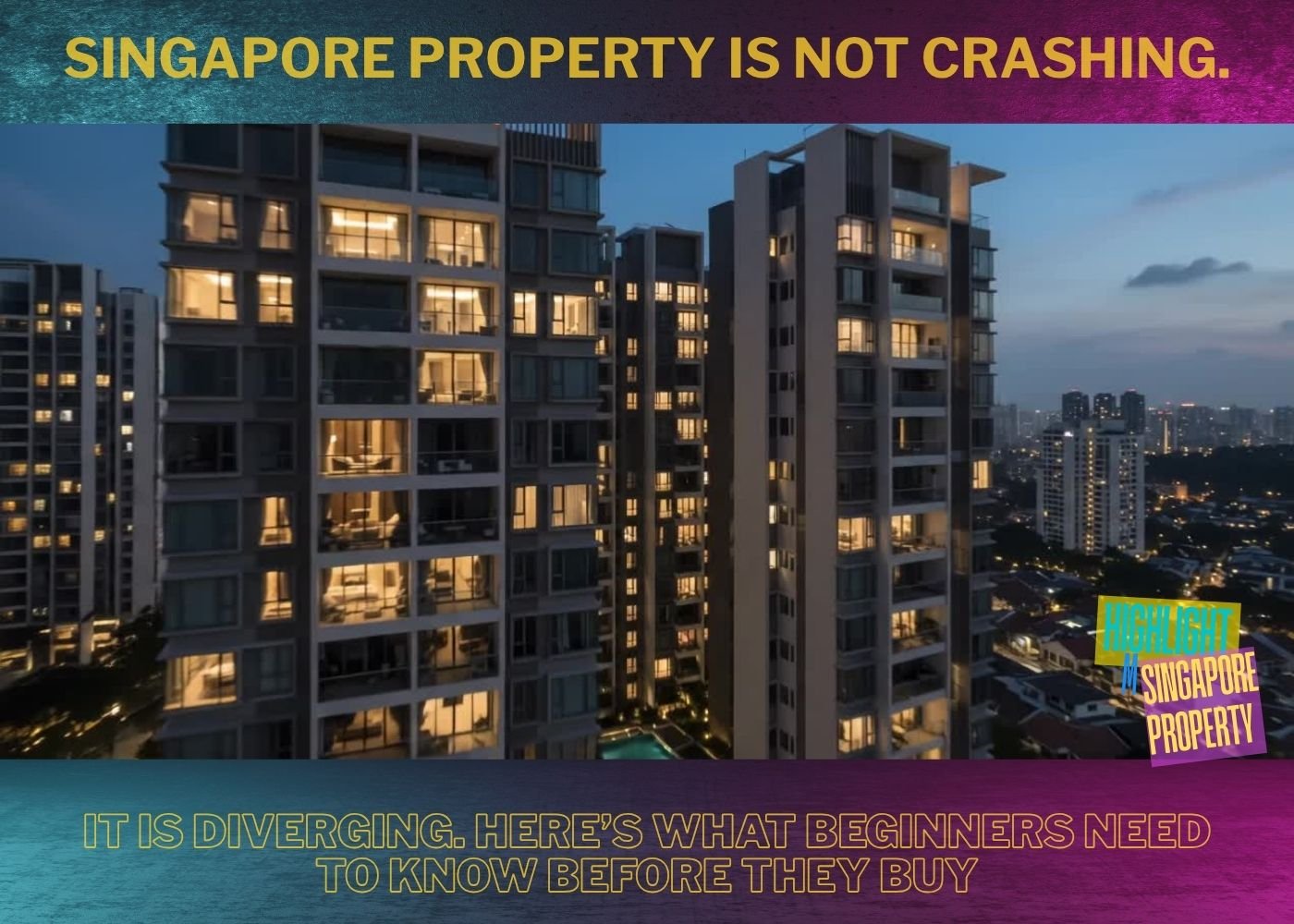
Last quarter, 83 families in Singapore reportedly saw their homes enter bank auction proceedings.
At almost the same time, Singapore property prices were reaching record levels, buyers were still entering showrooms, and developers continued launching new projects.
So which one is it?
Is Singapore property becoming dangerous?
Or is the market still fundamentally strong?
The answer may be more complicated than either headline suggests.
The real story is not simply whether property prices are going up or down.
It is about who is under pressure, where the pressure is coming from, how government policy is changing demand, and whether today’s buyer can survive tomorrow’s financial conditions.
That is why I believe one principle matters more than ever:
Do not buy property based on today’s affordability. Buy based on your ability to survive the full investment cycle.
1. The 83 Mortgage Auctions Should Get Your Attention
The content provided for this analysis highlights an increase in mortgage-sale listings from 67 to 83 in one quarter.
At first glance, that sounds alarming.
But one number does not automatically mean the entire Singapore property market is collapsing.
The more important question is:
Who is getting into trouble?
The source material identifies three groups that can be particularly exposed:
- Buyers who purchased around the peak of the 2021 to 2022 market.
- Landlords who became dependent on high rental income.
- Business owners who used their homes as collateral for their businesses.
That distinction is critical.
A property market can simultaneously have:
Record prices + strong transactions + financially distressed owners.
There is no contradiction.
Different owners have different entry prices, leverage, cash flow, interest rates and financial circumstances.
This is why looking only at the headline price index can be dangerous.
2. The Bank Says You Can Afford It. But Can You Actually Afford It?
This is one of the biggest lessons for first-time property investors.
Singapore has substantial lending safeguards.
TDSR limits total monthly debt obligations to 55% of gross monthly income.
For HDB-related financing, MSR limits the mortgage servicing burden to 30%.
Loan-to-value rules also restrict how much you can borrow and therefore how much equity you need to commit upfront.
These are important safeguards.
But there is a fundamental limitation.
They measure your financial position today.
Your property loan may last 20, 25 or 30 years.
Your income will not necessarily remain unchanged for 30 years.
Interest rates will not remain unchanged for 30 years.
Your family circumstances will not remain unchanged for 30 years.
Your health, career, business and cash flow will not remain unchanged for 30 years.
So there is a huge difference between:
“The bank approved my loan.”
and
“I can comfortably carry this property through multiple economic cycles.”
The source material makes this distinction particularly well. Bank affordability is effectively a snapshot, while property ownership is a long movie.
That is the mindset every beginner investor needs.
3. Your Real Affordability Is Lower Than Your Maximum Loan Eligibility
Imagine the bank tells you:
“You can afford this property.”
That does not mean:
“You should buy a property at this maximum amount.”
There is a massive difference.
Before buying, I would ask a beginner to run at least four stress tests.
Scenario 1: Interest rates rise
What happens if your mortgage rate increases significantly?
Can your monthly cash flow still survive?
Scenario 2: Your income falls
What happens if one spouse takes a career break?
What happens if your business revenue drops?
What happens if you change industries and your income temporarily declines?
Scenario 3: Your property cannot be sold immediately
What happens if your exit takes six months longer than expected?
Can you carry the loan?
Scenario 4: Rental income disappears
If you are buying an investment property, assume there will be periods where the property is vacant.
Can you still service the mortgage?
This is what I call stress-testing the full movie, not the snapshot.
4. Singapore Property Is a Managed Market
Another important factor beginners often underestimate is the role of government policy.
Singapore does not operate like a completely free property market.
The government has repeatedly introduced measures to influence demand, financing, ownership and affordability.
The provided content describes this as a “market thermostat”. When certain segments become overheated, policy can be tightened. When conditions change, restrictions can also be adjusted.
That means property investors need to monitor more than just:
Price per square foot.
You also need to monitor:
- Interest rates
- ABSD
- LTV rules
- TDSR
- HDB policies
- Housing supply
- MOP completions
- Private TOP completions
- Land supply
- Rental demand
- Demographics
- Government cooling measures
The policy environment can materially change the economics of a property purchase.
5. The 15-Month Rule Shows Why Policy Matters
One example discussed in the source material is the 15-month waiting period that affected certain private-property owners who wanted to buy resale HDB flats.
The policy was introduced during a period when HDB resale demand was particularly strong.
The argument was that some private-property owners could sell their private homes, unlock substantial cash and then compete aggressively for larger or more expensive HDB flats.
Later, as market conditions changed and additional public housing supply came through, the policy environment was adjusted.
The lesson for investors is not simply:
“Will HDB prices rise?”
The more important question is:
“What happens when government policy changes the behaviour of an entire group of buyers?”
This is why property investors need to understand policy direction rather than simply react to headlines.
6. The Next Big Question: Where Is Future Demand Coming From?
This is where the MOP and TOP relationship becomes interesting.
MOP means Minimum Occupation Period.
For many HDB households, reaching MOP creates a potential decision point:
Stay in HDB.
Upgrade to private property.
Move to another HDB.
Downsize.
Or simply remain where they are.
The source material argues that a meaningful proportion of households reaching MOP can become potential private-property upgraders. At the same time, the pipeline of completed private homes can influence the amount of available supply.
This creates an important concept:
Future demand is not just about today’s buyers.
It is about the number of households that may become buyers in the future.
That is why I always encourage investors to look beyond today’s transaction volume.
Look at the pipeline.
7. Supply and Demand Can Create a Bigger Upgrade Gap
Consider a simple example.
You own an HDB worth $800,000.
The private property you want costs $1.6 million.
Your upgrade gap is:
$800,000.
Now imagine the HDB price remains relatively flat.
But the private property increases from $1.6 million to $1.8 million.
Your upgrade gap becomes:
$1 million.
You did not become poorer.
Your HDB did not necessarily fall.
But the property you want became more expensive.
This is an important concept that many first-time investors and upgraders miss.
Sometimes the biggest risk is not:
“My property will crash.”
It is:
“The asset I want may move faster than the asset I currently own.”
That is why I call this the Upgrade Gap Risk.
8. Don’t Confuse Public Housing Supply With Private Housing Supply
Another important distinction is between different buyer segments.
More BTO supply can help satisfy demand from first-time buyers and households seeking public housing.
But that does not necessarily eliminate demand from households specifically seeking private property.
A 35-year-old upgrader looking for:
- Private facilities
- Security
- Larger living spaces
- Different locations
- Private-school proximity
- Investment flexibility
- Rental potential
may not see a BTO flat as a substitute.
This means Singapore’s housing market can develop different sub-markets at the same time.
HDB can behave differently from private residential.
And even within private residential:
CCR can behave differently from RCR.
RCR can behave differently from OCR.
A luxury condominium can behave differently from a mass-market development.
A new launch can behave differently from an older resale property.
So asking:
“Is Singapore property going up?”
is often the wrong question.
The better question is:
“Which property, in which location, for which buyer, at what price, under what financing structure?”
9. Beware of Reverse FOMO
Most people understand FOMO.
Fear Of Missing Out.
But property investors should also understand something I call:
Reverse FOMO.
It happens when you wait for prices to fall, but the property you want keeps moving further away from you.
You wait six months.
Your current property stays flat.
The target property rises.
The affordability gap widens.
You wait another six months.
The gap widens again.
Eventually you may discover something uncomfortable:
You were waiting for a cheaper market, but you ended up with a more expensive upgrade.
Of course, this does not mean everyone should rush out and buy immediately.
That would be equally dangerous.
The lesson is:
Waiting is also a financial decision.
You should know exactly what you are waiting for.
10. The Biggest Mistake Beginners Make
Many first-time investors ask:
“Which property should I buy?”
I think the better first question is:
“What is my investment objective?”
Are you trying to:
1. Generate rental income?
Then tenant demand, rental affordability and vacancy risk become critical.
2. Build capital appreciation?
Then future supply, location, infrastructure, land economics and buyer demand become more important.
3. Upgrade your own home?
Then lifestyle, financing and your future upgrade path matter.
4. Build a property portfolio?
Then today’s purchase must be evaluated based on how it affects your next purchase.
5. Preserve wealth?
Then liquidity, leverage and downside protection become much more important.
The same property can be excellent for one person and completely wrong for another.
11. The Seven Rules I Would Give Every First-Time Property Investor
If you are buying your first investment property, I would start with these seven rules.
Rule 1: Know Your Objective
Don’t buy because everyone around you is buying.
Define the job of the property.
Income?
Capital growth?
Portfolio building?
Retirement?
Legacy?
Your strategy should determine your property.
Not the other way around.
Rule 2: Never Borrow Your Maximum Just Because You Can
Your bank’s maximum is not your personal maximum.
Keep a financial buffer.
You need to survive periods of:
- Higher interest rates
- Lower rental income
- Vacancy
- Renovation
- Unexpected expenses
- Temporary income disruption
The goal is not to own the most expensive property you can qualify for.
The goal is to own an asset you can comfortably hold.
Rule 3: Calculate the Total Acquisition Cost
Do not look only at the purchase price.
Your real cost may include:
- Downpayment
- BSD
- ABSD, where applicable
- Legal fees
- Renovation
- Financing costs
- Agent fees, where applicable
- Maintenance
- Property tax
- Vacancy
- Interest expense
A property that looks affordable at the purchase price may have a very different total cost.
Rule 4: Understand the Future Buyer
Before buying, ask:
“Who will buy this property from me?”
This is one of the most important questions in property investment.
Do not only ask:
“Do I like it?”
Ask:
“Will the next buyer like it?”
A property with a broad future buyer pool generally gives you more exit flexibility.
Rule 5: Study Supply Before You Study the Showflat
Before falling in love with the kitchen, swimming pool or marble flooring, study the surrounding supply.
How many new units are coming?
What are the future developments?
What is the age of competing projects?
What are the upcoming transport links?
What are the potential competing launches?
Property is a relative game.
Your property does not exist in isolation.
Rule 6: Stress-Test Your Exit
Never build an investment strategy around one perfect scenario.
Ask:
What if prices stay flat for five years?
What if rental income falls?
What if interest rates rise?
What if I need to sell earlier than planned?
What if the market becomes illiquid?
What if my next property becomes more expensive?
A good investment strategy should survive imperfect conditions.
Rule 7: Think About Your Second Property Before Buying Your First
This is perhaps the most overlooked rule.
Your first property can either:
Create your next opportunity.
Or:
Destroy your next opportunity.
If your first property consumes too much cash, CPF and borrowing capacity, you may struggle to move into your next asset.
If structured correctly, however, the first property can become the foundation for your future portfolio.
That is why I do not believe property investment should be viewed as:
Buy → Hold → Hope.
It should be viewed as:
Buy → Build Equity → Protect Cash Flow → Upgrade → Reposition → Repeat.
The Singapore Property Market Is Not One Market
This is perhaps the most important conclusion from the entire discussion.
Singapore property is becoming increasingly segmented.
You can have:
Strong HDB demand.
Weak demand in another segment.
Strong rental demand.
Weak rental yields in another location.
Strong new-launch sales.
Weak resale liquidity.
Strong luxury prices.
Pressure on older projects.
At the same time.
This is why blanket statements such as:
“Singapore property will definitely rise.”
or
“Singapore property is going to crash.”
are both too simplistic.
The real opportunity is in understanding the divergence.
The Market Is Moving From “Can I Buy?” To “Should I Buy?”
For beginners, this is the mindset shift I want you to make.
The first question is:
Can I afford this property?
The second question should be:
Should I allocate this much of my financial capacity to this property?
And the third question should be:
What does this purchase allow me to do five or ten years from now?
That is where real property strategy begins.
Model the Full Movie, Not Just the Snapshot
Singapore’s property market has multiple layers.
Government policy.
Interest rates.
Household income.
CPF.
Housing supply.
MOP.
TOP.
Rental demand.
Land supply.
Population.
Financing.
And, increasingly, technology and AI.
The source material makes an important observation about how property analysis is evolving from gut feeling toward data-driven scenario modelling.
I agree with the direction.
The future property investor will not simply ask:
“What’s the psf?”
They will ask:
“What happens to my portfolio if the next 10 years do not go according to plan?”
That is a much more powerful question.
Because the objective of property investment is not simply to buy an asset.
It is to build wealth without destroying your financial flexibility along the way.
And that is the difference between buying property…
and having a property strategy.
Want to Know Whether Your Next Property Is Actually a Good Investment?
Before you buy, I can help you assess:
✓ Your current property position
✓ Your available cash and CPF
✓ Financing capacity
✓ ABSD exposure
✓ Rental potential
✓ Capital appreciation potential
✓ Supply and demand
✓ Future buyer pool
✓ Upgrade gap
✓ Exit strategy
✓ Your next-property options
I also offer a free property valuation so you can understand where your current property stands before making your next move.
If you are thinking about buying your first investment property, don’t start by asking me which property to buy.
Start by asking:
“What strategy should I use?”
DM me “STRATEGY” anLast quarter, 83 families in Singapore reportedly saw their homes enter bank auction proceedings.
At almost the same time, Singapore property prices were reaching record levels, buyers were still entering showrooms, and developers continued launching new projects.
So which one is it?
Is Singapore property becoming dangerous?
Or is the market still fundamentally strong?
The answer may be more complicated than either headline suggests.
The real story is not simply whether property prices are going up or down.
It is about who is under pressure, where the pressure is coming from, how government policy is changing demand, and whether today’s buyer can survive tomorrow’s financial conditions.
That is why I believe one principle matters more than ever:
Do not buy property based on today’s affordability. Buy based on your ability to survive the full investment cycle.
1. The 83 Mortgage Auctions Should Get Your Attention
The content provided for this analysis highlights an increase in mortgage-sale listings from 67 to 83 in one quarter.
At first glance, that sounds alarming.
But one number does not automatically mean the entire Singapore property market is collapsing.
The more important question is:
Who is getting into trouble?
The source material identifies three groups that can be particularly exposed:
- Buyers who purchased around the peak of the 2021 to 2022 market.
- Landlords who became dependent on high rental income.
- Business owners who used their homes as collateral for their businesses.
That distinction is critical.
A property market can simultaneously have:
Record prices + strong transactions + financially distressed owners.
There is no contradiction.
Different owners have different entry prices, leverage, cash flow, interest rates and financial circumstances.
This is why looking only at the headline price index can be dangerous.
2. The Bank Says You Can Afford It. But Can You Actually Afford It?
This is one of the biggest lessons for first-time property investors.
Singapore has substantial lending safeguards.
TDSR limits total monthly debt obligations to 55% of gross monthly income.
For HDB-related financing, MSR limits the mortgage servicing burden to 30%.
Loan-to-value rules also restrict how much you can borrow and therefore how much equity you need to commit upfront.
These are important safeguards.
But there is a fundamental limitation.
They measure your financial position today.
Your property loan may last 20, 25 or 30 years.
Your income will not necessarily remain unchanged for 30 years.
Interest rates will not remain unchanged for 30 years.
Your family circumstances will not remain unchanged for 30 years.
Your health, career, business and cash flow will not remain unchanged for 30 years.
So there is a huge difference between:
“The bank approved my loan.”
and
“I can comfortably carry this property through multiple economic cycles.”
The source material makes this distinction particularly well. Bank affordability is effectively a snapshot, while property ownership is a long movie.
That is the mindset every beginner investor needs.
3. Your Real Affordability Is Lower Than Your Maximum Loan Eligibility
Imagine the bank tells you:
“You can afford this property.”
That does not mean:
“You should buy a property at this maximum amount.”
There is a massive difference.
Before buying, I would ask a beginner to run at least four stress tests.
Scenario 1: Interest rates rise
What happens if your mortgage rate increases significantly?
Can your monthly cash flow still survive?
Scenario 2: Your income falls
What happens if one spouse takes a career break?
What happens if your business revenue drops?
What happens if you change industries and your income temporarily declines?
Scenario 3: Your property cannot be sold immediately
What happens if your exit takes six months longer than expected?
Can you carry the loan?
Scenario 4: Rental income disappears
If you are buying an investment property, assume there will be periods where the property is vacant.
Can you still service the mortgage?
This is what I call stress-testing the full movie, not the snapshot.
4. Singapore Property Is a Managed Market
Another important factor beginners often underestimate is the role of government policy.
Singapore does not operate like a completely free property market.
The government has repeatedly introduced measures to influence demand, financing, ownership and affordability.
The provided content describes this as a “market thermostat”. When certain segments become overheated, policy can be tightened. When conditions change, restrictions can also be adjusted.
That means property investors need to monitor more than just:
Price per square foot.
You also need to monitor:
- Interest rates
- ABSD
- LTV rules
- TDSR
- HDB policies
- Housing supply
- MOP completions
- Private TOP completions
- Land supply
- Rental demand
- Demographics
- Government cooling measures
The policy environment can materially change the economics of a property purchase.
5. The 15-Month Rule Shows Why Policy Matters
One example discussed in the source material is the 15-month waiting period that affected certain private-property owners who wanted to buy resale HDB flats.
The policy was introduced during a period when HDB resale demand was particularly strong.
The argument was that some private-property owners could sell their private homes, unlock substantial cash and then compete aggressively for larger or more expensive HDB flats.
Later, as market conditions changed and additional public housing supply came through, the policy environment was adjusted.
The lesson for investors is not simply:
“Will HDB prices rise?”
The more important question is:
“What happens when government policy changes the behaviour of an entire group of buyers?”
This is why property investors need to understand policy direction rather than simply react to headlines.
6. The Next Big Question: Where Is Future Demand Coming From?
This is where the MOP and TOP relationship becomes interesting.
MOP means Minimum Occupation Period.
For many HDB households, reaching MOP creates a potential decision point:
Stay in HDB.
Upgrade to private property.
Move to another HDB.
Downsize.
Or simply remain where they are.
The source material argues that a meaningful proportion of households reaching MOP can become potential private-property upgraders. At the same time, the pipeline of completed private homes can influence the amount of available supply.
This creates an important concept:
Future demand is not just about today’s buyers.
It is about the number of households that may become buyers in the future.
That is why I always encourage investors to look beyond today’s transaction volume.
Look at the pipeline.
7. Supply and Demand Can Create a Bigger Upgrade Gap
Consider a simple example.
You own an HDB worth $800,000.
The private property you want costs $1.6 million.
Your upgrade gap is:
$800,000.
Now imagine the HDB price remains relatively flat.
But the private property increases from $1.6 million to $1.8 million.
Your upgrade gap becomes:
$1 million.
You did not become poorer.
Your HDB did not necessarily fall.
But the property you want became more expensive.
This is an important concept that many first-time investors and upgraders miss.
Sometimes the biggest risk is not:
“My property will crash.”
It is:
“The asset I want may move faster than the asset I currently own.”
That is why I call this the Upgrade Gap Risk.
8. Don’t Confuse Public Housing Supply With Private Housing Supply
Another important distinction is between different buyer segments.
More BTO supply can help satisfy demand from first-time buyers and households seeking public housing.
But that does not necessarily eliminate demand from households specifically seeking private property.
A 35-year-old upgrader looking for:
- Private facilities
- Security
- Larger living spaces
- Different locations
- Private-school proximity
- Investment flexibility
- Rental potential
may not see a BTO flat as a substitute.
This means Singapore’s housing market can develop different sub-markets at the same time.
HDB can behave differently from private residential.
And even within private residential:
CCR can behave differently from RCR.
RCR can behave differently from OCR.
A luxury condominium can behave differently from a mass-market development.
A new launch can behave differently from an older resale property.
So asking:
“Is Singapore property going up?”
is often the wrong question.
The better question is:
“Which property, in which location, for which buyer, at what price, under what financing structure?”
9. Beware of Reverse FOMO
Most people understand FOMO.
Fear Of Missing Out.
But property investors should also understand something I call:
Reverse FOMO.
It happens when you wait for prices to fall, but the property you want keeps moving further away from you.
You wait six months.
Your current property stays flat.
The target property rises.
The affordability gap widens.
You wait another six months.
The gap widens again.
Eventually you may discover something uncomfortable:
You were waiting for a cheaper market, but you ended up with a more expensive upgrade.
Of course, this does not mean everyone should rush out and buy immediately.
That would be equally dangerous.
The lesson is:
Waiting is also a financial decision.
You should know exactly what you are waiting for.
10. The Biggest Mistake Beginners Make
Many first-time investors ask:
“Which property should I buy?”
I think the better first question is:
“What is my investment objective?”
Are you trying to:
1. Generate rental income?
Then tenant demand, rental affordability and vacancy risk become critical.
2. Build capital appreciation?
Then future supply, location, infrastructure, land economics and buyer demand become more important.
3. Upgrade your own home?
Then lifestyle, financing and your future upgrade path matter.
4. Build a property portfolio?
Then today’s purchase must be evaluated based on how it affects your next purchase.
5. Preserve wealth?
Then liquidity, leverage and downside protection become much more important.
The same property can be excellent for one person and completely wrong for another.
11. The Seven Rules I Would Give Every First-Time Property Investor
If you are buying your first investment property, I would start with these seven rules.
Rule 1: Know Your Objective
Don’t buy because everyone around you is buying.
Define the job of the property.
Income?
Capital growth?
Portfolio building?
Retirement?
Legacy?
Your strategy should determine your property.
Not the other way around.
Rule 2: Never Borrow Your Maximum Just Because You Can
Your bank’s maximum is not your personal maximum.
Keep a financial buffer.
You need to survive periods of:
- Higher interest rates
- Lower rental income
- Vacancy
- Renovation
- Unexpected expenses
- Temporary income disruption
The goal is not to own the most expensive property you can qualify for.
The goal is to own an asset you can comfortably hold.
Rule 3: Calculate the Total Acquisition Cost
Do not look only at the purchase price.
Your real cost may include:
- Downpayment
- BSD
- ABSD, where applicable
- Legal fees
- Renovation
- Financing costs
- Agent fees, where applicable
- Maintenance
- Property tax
- Vacancy
- Interest expense
A property that looks affordable at the purchase price may have a very different total cost.
Rule 4: Understand the Future Buyer
Before buying, ask:
“Who will buy this property from me?”
This is one of the most important questions in property investment.
Do not only ask:
“Do I like it?”
Ask:
“Will the next buyer like it?”
A property with a broad future buyer pool generally gives you more exit flexibility.
Rule 5: Study Supply Before You Study the Showflat
Before falling in love with the kitchen, swimming pool or marble flooring, study the surrounding supply.
How many new units are coming?
What are the future developments?
What is the age of competing projects?
What are the upcoming transport links?
What are the potential competing launches?
Property is a relative game.
Your property does not exist in isolation.
Rule 6: Stress-Test Your Exit
Never build an investment strategy around one perfect scenario.
Ask:
What if prices stay flat for five years?
What if rental income falls?
What if interest rates rise?
What if I need to sell earlier than planned?
What if the market becomes illiquid?
What if my next property becomes more expensive?
A good investment strategy should survive imperfect conditions.
Rule 7: Think About Your Second Property Before Buying Your First
This is perhaps the most overlooked rule.
Your first property can either:
Create your next opportunity.
Or:
Destroy your next opportunity.
If your first property consumes too much cash, CPF and borrowing capacity, you may struggle to move into your next asset.
If structured correctly, however, the first property can become the foundation for your future portfolio.
That is why I do not believe property investment should be viewed as:
Buy → Hold → Hope.
It should be viewed as:
Buy → Build Equity → Protect Cash Flow → Upgrade → Reposition → Repeat.
The Singapore Property Market Is Not One Market
This is perhaps the most important conclusion from the entire discussion.
Singapore property is becoming increasingly segmented.
You can have:
Strong HDB demand.
Weak demand in another segment.
Strong rental demand.
Weak rental yields in another location.
Strong new-launch sales.
Weak resale liquidity.
Strong luxury prices.
Pressure on older projects.
At the same time.
This is why blanket statements such as:
“Singapore property will definitely rise.”
or
“Singapore property is going to crash.”
are both too simplistic.
The real opportunity is in understanding the divergence.
The Market Is Moving From “Can I Buy?” To “Should I Buy?”
For beginners, this is the mindset shift I want you to make.
The first question is:
Can I afford this property?
The second question should be:
Should I allocate this much of my financial capacity to this property?
And the third question should be:
What does this purchase allow me to do five or ten years from now?
That is where real property strategy begins.
Model the Full Movie, Not Just the Snapshot
Singapore’s property market has multiple layers.
Government policy.
Interest rates.
Household income.
CPF.
Housing supply.
MOP.
TOP.
Rental demand.
Land supply.
Population.
Financing.
And, increasingly, technology and AI.
The source material makes an important observation about how property analysis is evolving from gut feeling toward data-driven scenario modelling.
I agree with the direction.
The future property investor will not simply ask:
“What’s the psf?”
They will ask:
“What happens to my portfolio if the next 10 years do not go according to plan?”
That is a much more powerful question.
Because the objective of property investment is not simply to buy an asset.
It is to build wealth without destroying your financial flexibility along the way.
And that is the difference between buying property…
and having a property strategy.
Want to Know Whether Your Next Property Is Actually a Good Investment?
Before you buy, I can help you assess:
✓ Your current property position
✓ Your available cash and CPF
✓ Financing capacity
✓ ABSD exposure
✓ Rental potential
✓ Capital appreciation potential
✓ Supply and demand
✓ Future buyer pool
✓ Upgrade gap
✓ Exit strategy
✓ Your next-property options
I also offer a free property valuation so you can understand where your current property stands before making your next move.
If you are thinking about buying your first investment property, don’t start by asking me which property to buy.
Start by asking:
“What strategy should I use?”
DM me “STRATEGY” and let’s have a conversation about your property position, your objective and the next move that makes sense for you.
This article is for educational purposes and should not be treated as individual financial, tax or legal advice. Property decisions should be assessed based on your own financial circumstances and the prevailing rules at the time of purchase.
#ThisIsM #MSingaporeProperty msingaporeproperty.comd let’s have a conversation about your property position, your objective and the next move that makes sense for you.
This article is for educational purposes and should not be treated as individual financial, tax or legal advice. Property decisions should be assessed based on your own financial circumstances and the prevailing rules at the time of purchase.
#M #ThisIsM #ThisisMMikeChin #Propnex #MAssociate #Msingaporeproperty #AIForRealtors #RealEstate #PropertyForSale #InvestIngRealEstate #RealEstateInvestment #HomeBuyers #PropertyInvestment #DreamHome #HouseGoals #PropertyMarket #RealEstateLife #RealEstateExpert #HomesForSale #InvestIngProperty #RealEstateDevelopment #NewHome #OpenHouse #RealEstateSingapore #CondoLife #LuxuryLiving #HomeSweetHome #RealEstateTips #RealEstateInvestor #businessmentorship
www.msingaporeproperty.com