Boon Keat ❂ (Mike, M.) CHIN
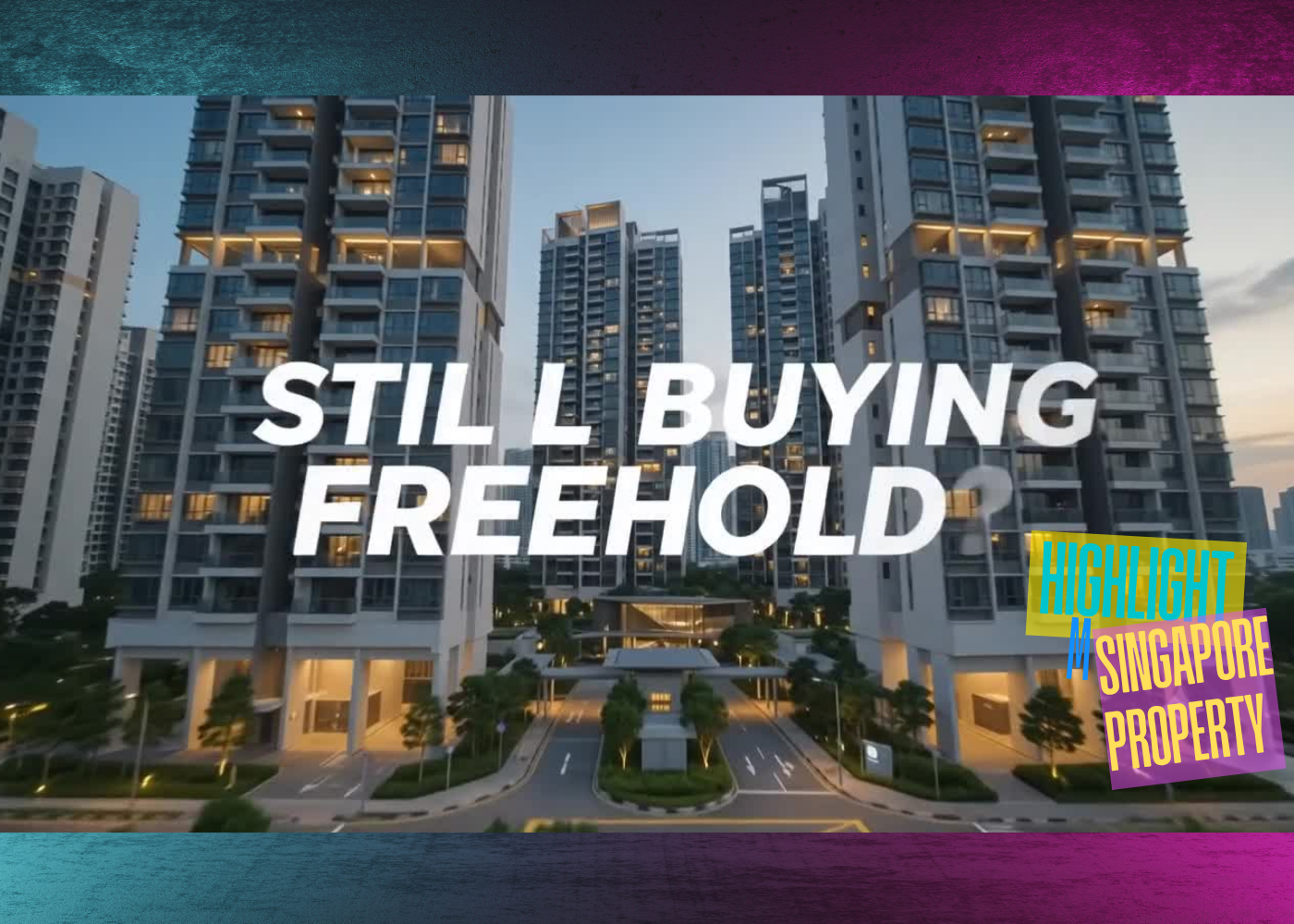
For decades, Singaporeans have grown up believing one simple rule.
“Always buy freehold.”
Perhaps your parents told you.
Perhaps your relatives repeated it during Chinese New Year gatherings.
Perhaps your property agent used it as the biggest selling point.
The reasoning always sounds perfectly logical.
“Freehold lasts forever.”
“Leasehold expires.”
“Land becomes more valuable over time.”
“You’ll leave something behind for your children.”
For generations, this became accepted wisdom.
It wasn’t questioned.
It wasn’t challenged.
It simply became “common knowledge.”
Yet the Singapore property market has a habit of rewarding those who understand how markets evolve, not those who simply repeat what worked thirty years ago.
Today, the numbers tell a very different story.
After analysing more than a decade of market performance across Singapore’s 28 districts, something remarkable appears.
The property type that many Singaporeans fear most has actually been one of the strongest wealth creators in recent years.
That raises an uncomfortable question.
Has the definition of a “good property investment” fundamentally changed?
The Biggest Misunderstanding About Freehold
Let’s be absolutely clear.
This article is not saying freehold is bad.
Freehold remains one of the finest ownership structures available.
You own the land indefinitely.
There is no lease countdown.
There is tremendous emotional comfort knowing your property can potentially stay within your family for generations.
But comfort and investment performance are not always the same thing.
Those are two completely different objectives.
One focuses on preserving wealth.
The other focuses on growing wealth.
Many buyers unknowingly confuse the two.
Why Does Singapore Even Have 99-Year Leasehold?
To understand today’s market, we need to travel back several decades.
Singapore is one of the world’s smallest countries.
Land is finite.
Population continues growing.
Infrastructure constantly evolves.
Imagine if every parcel of land had been sold as freehold decades ago.
What happens when an MRT line needs expansion?
Or a new hospital?
Or a transport hub?
Or an entirely new town?
Redeveloping thousands of individually owned freehold plots would become an enormous legal and financial challenge.
Instead, Singapore adopted a very different philosophy.
Government Land Sales.
Developers lease land.
Homes are built.
Communities flourish.
Eventually, decades later, the land returns to the State, allowing entire districts to be reinvented for future generations.
The objective was never to disadvantage homeowners.
The objective was to ensure Singapore itself never becomes frozen in time.
Cities must evolve.
Infrastructure must evolve.
Neighbourhoods must evolve.
The lease system allows that evolution to happen.
Think About It Like Software Updates
Imagine buying a smartphone.
Now imagine that phone could never receive another software update.
Initially, everything works perfectly.
But slowly…
Apps become outdated.
Security weakens.
Technology moves forward.
Eventually the hardware itself becomes obsolete.
Singapore’s land planning works similarly.
The Government designed the system so entire neighbourhoods can eventually be upgraded rather than permanently remaining exactly as they were decades earlier.
That flexibility has become one of Singapore’s greatest competitive advantages.
Why Younger Buyers Think Differently
One of the biggest shifts isn’t the property.
It’s the buyer.
Today’s buyers are fundamentally different from buyers thirty years ago.
Previous generations worried about one question.
“Will my children still be able to afford property?”
Today’s generation asks something different.
“Does this property improve my lifestyle today?”
Modern buyers grew up in BTO flats.
Highly efficient layouts.
Minimal wasted space.
Functional kitchens.
Practical bedrooms.
Smart designs.
When they upgrade into private property, they’re looking for exactly the same efficiency.
Just with better facilities.
Swimming pools.
Gyms.
Clubhouses.
Landscaped gardens.
Children’s play areas.
BBQ pavilions.
Tennis courts.
These lifestyle expectations naturally favour modern large-scale developments.
Most of those developments happen to be…
99-year leasehold.
Why Mega Developments Keep Winning
One of the biggest structural differences between freehold and leasehold developments lies in scale.
Many newer 99-year developments contain:
- 500 units
- 800 units
- 1,000 units
- Sometimes even more.
That changes everything.
Because when 1,000 households contribute monthly maintenance fees…
You can build facilities that boutique developments simply cannot justify.
Olympic-sized pools.
Massive gyms.
Multiple function rooms.
Landscaped parks.
Private shuttle buses.
Co-working lounges.
Family-friendly facilities.
These aren’t just luxuries.
They’ve become expectations.
Especially among younger families.
Meanwhile…
Many older freehold developments were constructed decades ago.
Smaller plots.
Older building regulations.
Different lifestyle expectations.
Sometimes just:
- A small swimming pool.
- Tiny gym.
- Limited facilities.
- Ageing common areas.
Again…
Nothing wrong with them.
But buyer preferences have changed dramatically.
Markets reward what buyers want today.
Not what buyers wanted twenty years ago.
The Numbers Tell an Incredible Story
Market performance from 2014 to 2026 reveals a surprising trend.
According to the market analysis discussed in this article:
New 99-Year Leasehold
Approximate capital growth:
125.39%
New Freehold
Approximate capital growth:
79.32%
Older Freehold Resale
Approximate capital growth:
43.21%
Read that again.
The asset many Singaporeans considered “inferior” significantly outperformed the asset traditionally viewed as the safest.
That’s a remarkable reversal.
Why Older Freehold Often Underperforms
This isn’t because buyers dislike freehold.
It’s because buyers increasingly dislike inefficient homes.
Walk into many older apartments.
You’ll often find:
- Long corridors
- Awkward layouts
- Oversized foyers
- Curved bay windows
- Small kitchens
- Poor bedroom proportions
A modern 1,100 sq ft apartment today can comfortably fit four bedrooms.
An older 1,100 sq ft apartment might only contain two.
The usable space matters more than the total space.
Function has overtaken size.
Renovation Is the Silent Wealth Destroyer
Here’s another reality.
Older homes usually require significant renovation.
Electrical systems.
Bathrooms.
Flooring.
Air-conditioning.
Kitchen.
Waterproofing.
Carpentry.
It’s not unusual for buyers to spend well over S$150,000 to S$200,000 before moving in.
Young families increasingly ask a different question.
“Why renovate when I can simply buy new?”
The answer often pushes demand toward newer developments.
But Doesn’t Leasehold Depreciate?
Yes.
Mathematically.
This is where many people reference the Bala Curve, which models how leasehold value declines as the remaining lease shortens.
Generally:
- Early years. Minimal impact.
- Around 60 years remaining. Depreciation becomes more noticeable.
- Around 30 years remaining. Financing becomes increasingly difficult.
- Buyer demand narrows significantly.
On paper, that sounds alarming.
In practice, Singapore’s market introduces another variable.
The Collective Sale Safety Net
Developers constantly need land.
As older developments age, many become attractive collective sale candidates.
Owners receive offers.
Developers top up the lease.
Old buildings are demolished.
New developments emerge.
This process has repeated itself across numerous mature estates.
For many owners, appreciation has occurred long before lease decay became their biggest concern.
This doesn’t guarantee every development will enjoy a collective sale.
But it explains why many leasehold owners have historically exited well before the theoretical depreciation curve became severe.
Location Still Matters. But Not Everywhere Equally.
One of the biggest mistakes investors make is assuming every district behaves identically.
It doesn’t.
Some districts strongly favour modern leasehold developments.
Others continue rewarding freehold ownership.
Understanding the difference is critical.
Where Leasehold Dominates
Districts undergoing major Government transformation tend to favour 99-year developments.
Examples include areas experiencing:
- New MRT infrastructure
- New commercial centres
- Urban rejuvenation
- Government master planning
- Large integrated developments
Why?
Because infrastructure creates demand.
Demand creates transactions.
Transactions create price momentum.
Modern developments capture much of that momentum.
Where Freehold Still Makes Sense
Freehold continues excelling under very specific circumstances.
1. Elite School Districts
Families buying near prestigious schools often remain for 10 to 15 years.
Their objective isn’t rapid capital appreciation.
Their objective is educational stability.
For them…
Freehold offers psychological comfort.
2. Legacy Ownership
Some buyers simply want a forever home.
No intention of upgrading.
No intention of flipping.
No intention of timing the market.
For these buyers…
Freehold remains exceptionally attractive.
Because lifestyle, not investment return, is the primary objective.
The Biggest Opportunity Few Buyers Are Talking About
Ironically…
Today’s market may offer one of the rarest opportunities we’ve seen in years.
During recent years, leasehold prices appreciated so aggressively that the pricing gap between certain new leasehold and freehold developments narrowed dramatically.
In some projects…
The premium for owning land forever became surprisingly small.
That creates opportunities where buyers may secure freehold ownership at pricing levels historically associated with leasehold developments.
Markets rarely stay inefficient forever.
Opportunities like these tend to disappear quickly.
The GFA Harmonisation Effect
Another structural change is quietly reshaping pricing.
Singapore’s Gross Floor Area (GFA) Harmonisation policy changed how developers calculate sellable space.
Previously, buyers often paid for:
- Aircon ledges
- Large void spaces
- Inefficient balconies
Today…
Developers must deliver far more usable living space.
That’s excellent for buyers.
But it also compresses developer margins.
As margins compress…
Future launch prices naturally increase.
Why?
Developers still need to earn acceptable returns.
The transition period we are currently experiencing may therefore represent one of the final opportunities to purchase projects launched under the previous cost structures.
The Question Buyers Should Really Ask
Instead of asking:
“Is freehold better?”
Ask:
“What am I actually trying to achieve?”
Because those answers are rarely identical.
If your goal is:
- Long-term family legacy
- Elite school planning
- Permanent residence
- Emotional security
Freehold may be exactly right.
If your goal is:
- Capital appreciation
- Riding Government transformation
- Modern layouts
- Lifestyle facilities
- Maximum wealth creation
A carefully selected 99-year development may outperform.
Neither choice is universally correct.
The right choice depends entirely on your objective.
Final Thoughts
The Singapore property market has evolved dramatically.
Many strategies that worked twenty years ago still sound convincing.
But markets don’t reward nostalgia.
They reward adaptation.
The greatest investors aren’t the ones who stubbornly defend yesterday’s rules.
They’re the ones willing to question them.
Freehold is still exceptional.
Leasehold is still powerful.
Neither is automatically superior.
The winner is the one that aligns with your financial strategy, investment horizon, lifestyle priorities, and long-term wealth plan.
Successful property investing has never been about choosing between two labels.
It’s about understanding why one works better than the other for your unique situation.
That distinction alone could be worth hundreds of thousands of dollars over the next decade.
Your Move
The biggest property mistakes rarely come from buying the “wrong” tenure.
They come from buying the right property for someone else’s strategy.
Before your next purchase, ask yourself:
✅ Am I buying for wealth creation or wealth preservation?
✅ Does this property match my investment horizon?
✅ Have I evaluated replacement costs, future supply and infrastructure?
✅ Am I following data, or simply repeating conventional wisdom?
Every buyer’s circumstances are different.
Whether you’re deciding between freehold and 99-year leasehold, upgrading from your HDB, purchasing your first investment property, or restructuring your portfolio, the decision should be based on evidence, not assumptions.
Sometimes one strategic conversation can prevent years of expensive mistakes.
If you’d like a personalised analysis of your property options and long-term wealth strategy, I’d be happy to help.
This is M. (Mike Chin)
Helping Singaporeans make smarter property decisions through data, strategy, and long-term wealth planning.
📩 Connect with me on LinkedIn or message me to arrange a personalised property strategy consultation.
#ThisIsM #MSingaporeProperty #SingaporeProperty #PropertyInvestment #Freehold #99YearLeasehold #RealEstate #PropertyWealth #PropertyStrategy #WealthPlanning #SingaporeRealEstate #PropNex #MAssociate