Boon Keat ❂ CHIN
Real Estate Consultant | Trusted Advisor with 14+ Years of Experience | Founder of M | MIKE Framework Architect l FCPA (AUS) CA (SIN) MBA
For decades, the Singapore property market operated on one invisible assumption:
If buying or selling a property feels painful, expensive, and emotionally exhausting… then the process must be legitimate.
Because let’s face it.
Most people subconsciously associate friction with value.
A $2 million transaction is “supposed” to feel difficult.
You’re expected to sacrifice weekends.
Drive across the island for pointless viewings.
Drown in paperwork.
Chase agents.
Coordinate lawyers.
Wait endlessly for approvals.
Argue through negotiations.
Lose sleep over timelines.
That stress became normalized.
But something dangerous is happening in Singapore real estate right now.
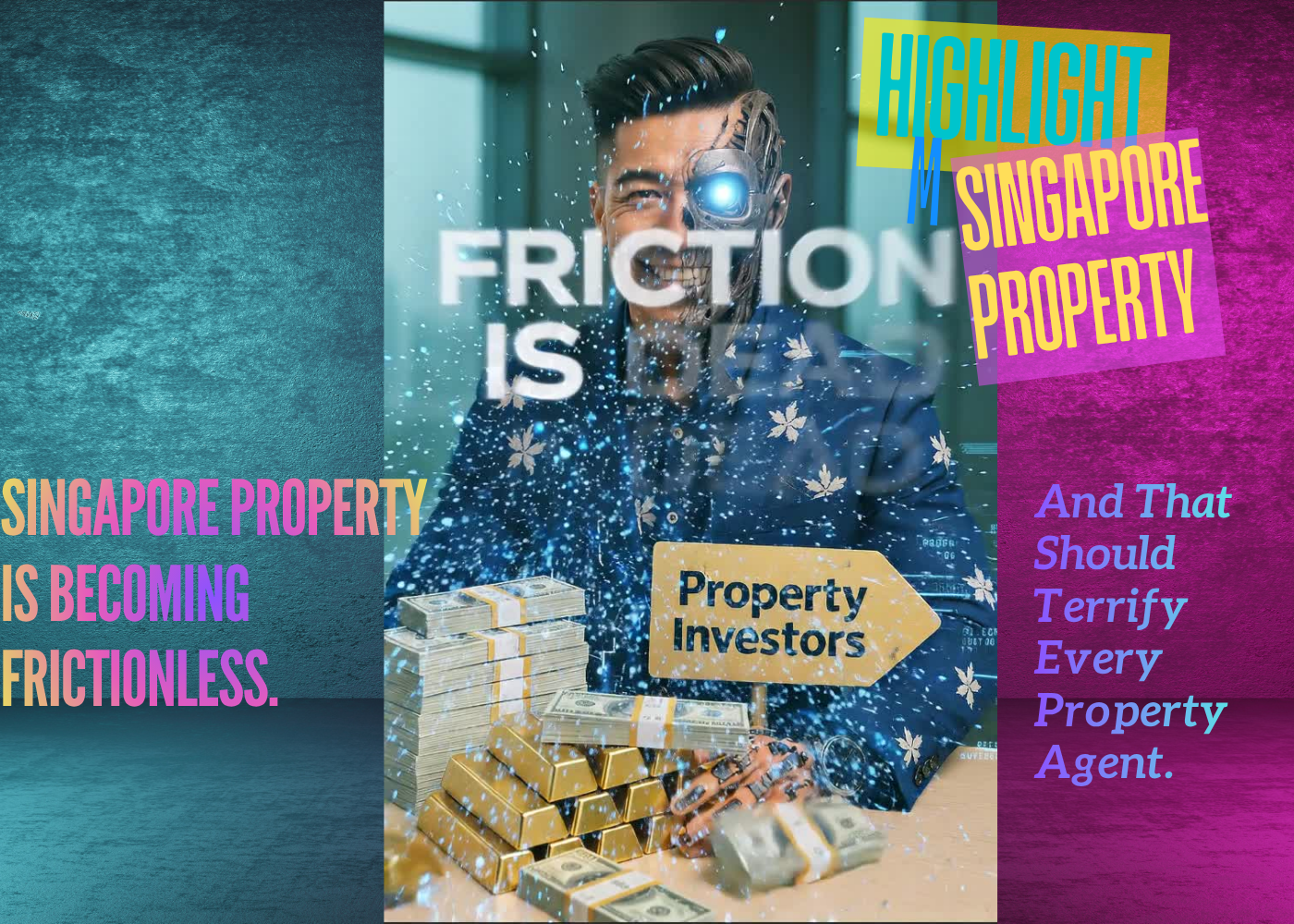
The friction is disappearing.
Quietly.
Rapidly.
Irreversibly.
And most agents still do not understand what this means.
The Real Estate Industry Is Being Rewritten by Technology
A massive shift is happening beneath the surface of Singapore property.
Not through dramatic headlines.
Not through some market crash.
Not through a sudden policy announcement.
But through user experience.
That is the real battlefield now.
Platforms like Realsmart.sg are not trying to “replace” Singapore’s highly regulated housing ecosystem.
They are doing something far more disruptive.
They are removing friction from the transaction process itself.
And once consumers experience convenience, they never want to go backward again.
Silicon Valley Thinking Has Entered Singapore Property
One of the most fascinating parts of this transformation is where the mindset is coming from.
Silicon Valley.
Traditionally, Silicon Valley operates on one brutal philosophy:
“Move fast and break things.”
But Singapore real estate cannot function like that.
You cannot “break things” in a market tied to:
- HDB regulations
- CPF retirement funds
- family wealth
- housing stability
- legal compliance
- generational financial planning
This is not food delivery.
This is not ride-hailing.
This is not social media.
This is the largest financial decision most Singaporeans will ever make.
So instead of breaking the system, proptech companies are targeting something else entirely:
The experience of navigating the system.
That changes everything.
The Old Real Estate Process Was Built on Friction
Think about how property transactions traditionally worked.
A buyer wants to view six properties.
What happens?
- endless WhatsApp coordination
- inconvenient scheduling
- misleading listing photos
- inaccurate floor plans
- duplicate listings
- outdated pricing
- physical paperwork
- manual calculations
- delayed responses
Consumers tolerated this because they had no alternative.
But technology has now exposed something uncomfortable:
Most of that pain was never necessary.
AI Is Quietly Reshaping Buyer Behavior
Now layer in today’s macroeconomic environment.
Oil prices rise.
Construction costs rise.
New launch prices surge.
Interest rates fluctuate.
Global uncertainty increases.
As new launches become more expensive, buyers naturally pivot toward the resale market looking for value.
But Singapore’s resale market is incredibly dense and competitive.
Manually identifying undervalued opportunities is almost impossible.
This is where AI enters the picture.
Artificial intelligence can now scan:
- decades of transaction data
- rental trends
- zoning changes
- future infrastructure developments
- historical appreciation patterns
- supply pipelines
- neighborhood growth trends
In seconds.
The result?
Consumers are becoming dramatically more informed before they even speak to an agent.
And that fundamentally changes buyer psychology.
Why Price Per Square Foot Is Becoming Less Important
For years, Singapore property buyers obsessed over one metric:
PSF.
Price per square foot.
It became the holy grail of valuation.
But technology is changing how consumers define value itself.
Here’s why.
Traditionally, buyers relied heavily on PSF because they lacked visibility into how a space truly functioned.
A floor plan on paper tells you very little emotionally.
But today?
Buyers can experience:
- immersive 3D walkthroughs
- virtual staging
- AI renovation mockups
- spatial planning simulations
- lighting visualization
- layout efficiency analysis
Before physically stepping into the unit.
And this creates a huge psychological shift.
A 900 sqft condo with exceptional layout efficiency may now feel more livable than a poorly designed 1,100 sqft unit.
Suddenly buyers stop asking:
“How big is this?”
And start asking:
“How well does this space actually live?”
That changes pricing dynamics completely.
The future buyer values usability over raw size.
And that is why certain buyers are increasingly willing to tolerate higher PSF pricing for highly efficient layouts.
The math did not disappear.
The definition of value evolved.
The Real Threat Facing Property Agents
Now we arrive at the uncomfortable question the industry keeps avoiding.
If technology removes friction…
What exactly happens to the property agent?
This is where many agents panic unnecessarily.
Because technology is not replacing agents.
It is replacing low-value tasks.
And there is a massive difference.
AI Is Separating Real Agents From Transactional Middlemen
Think about the traditional role many agents played.
A large portion of the job involved:
- opening doors
- arranging viewings
- chasing paperwork
- generating reports
- manually gathering data
- compiling comparatives
- coordinating logistics
These are not strategic skills.
These are administrative functions.
And machines are infinitely better at repetitive administrative work.
Faster.
Cheaper.
More accurate.
More scalable.
So yes.
Agents whose entire value proposition depends on gatekeeping information are in serious danger.
Because consumers now have direct access to:
- market data
- transaction history
- pricing tools
- virtual tours
- mortgage calculations
- AI comparisons
The information advantage is disappearing.
Fast.
The Winning Property Agent of 2026 Looks Completely Different
The successful property agent moving forward is no longer a data collector.
They become a strategist.
A negotiator.
A behavioral advisor.
A trust builder.
Because AI can calculate numbers.
But it cannot understand human fear.
And property transactions are deeply emotional.
A young family upgrading from HDB to private property is not simply solving a math equation.
They are dealing with:
- fear of overpaying
- timing anxiety
- school placement stress
- family planning
- financial insecurity
- emotional attachment
- uncertainty about the future
An algorithm cannot sit across the table and read body language.
It cannot calm a nervous seller.
It cannot manage ego during negotiations.
It cannot strategically position a uniquely shaped unit with emotional storytelling.
It cannot create trust.
Humans still close emotional decisions.
And real estate remains emotional.
Technology Is Not a Bulldozer. It’s a Centrifuge.
The best analogy for what’s happening right now is this:
Technology is not destroying the property industry.
It is spinning it at extremely high speed.
Like a centrifuge.
And under pressure, the industry separates itself naturally.
The weak transactional middlemen get filtered out.
The strategic high-value advisors rise to the top.
That is exactly what is happening now.
The Biggest Mistake Agents Are Making Today
Many agents still think AI is optional.
It is not.
The market already shifted.
Consumers are already evolving.
The danger is not AI itself.
The danger is agents refusing to adapt while consumers become increasingly tech-enabled.
That gap becomes fatal over time.
Because eventually consumers will ask:
“If technology already gives me the data…
What unique value does this agent actually provide?”
That is the defining question of the next decade.
Singapore Property Is Entering a Completely New Era
The next phase of Singapore real estate will belong to professionals who combine:
- technology
- behavioral psychology
- strategic advisory
- negotiation mastery
- branding
- trust
- communication
- market intelligence
The future agent is not less human.
Ironically, they must become even more human.
Because technology handles the mechanics.
Humans handle the emotions.
And emotions still move markets.
Final Thought
Fast forward to 2030.
Imagine a world where AI handles:
- property matching
- valuation
- legal documentation
- scheduling
- marketing copy
- virtual staging
- mortgage analysis
- transaction processing
Instantly.
At near-zero friction.
If all administrative work disappears…
What is the one uniquely human skill that still makes you irreplaceable?
That question will determine who survives the next era of Singapore real estate.
If you are a property agent, marketer, investor, buyer, or business owner operating in Singapore’s evolving real estate landscape, now is the time to adapt before the market forces adaptation onto you.
Audit your daily workflow.
Identify the repetitive tasks draining your time.
Leverage AI tools aggressively.
Use technology to remove friction.
Then reinvest that time into building deeper client relationships, stronger strategic thinking, and higher-value advisory skills.
Because the future of property is no longer about who has the most listings.
It is about who creates the most trust in a world where information is becoming free.
If you want to understand how AI, proptech, branding, and consumer psychology are reshaping Singapore property in 2026 and beyond, feel free to connect with me.
Let the machines do the calculating.
You focus on the connecting.
#M #ThisIsM #ThisisMMikeChin #Propnex #MAssociate #Msingaporeproperty #AIForRealtors #RealEstate #PropertyForSale #InvestIngRealEstate #RealEstateInvestment #HomeBuyers #PropertyInvestment #DreamHome #HouseGoals #PropertyMarket #RealEstateLife #RealEstateExpert #HomesForSale #InvestIngProperty #RealEstateDevelopment #NewHome #OpenHouse #RealEstateSingapore #CondoLife #LuxuryLiving #HomeSweetHome #RealEstateTips #RealEstateInvestor #businessmentorship